






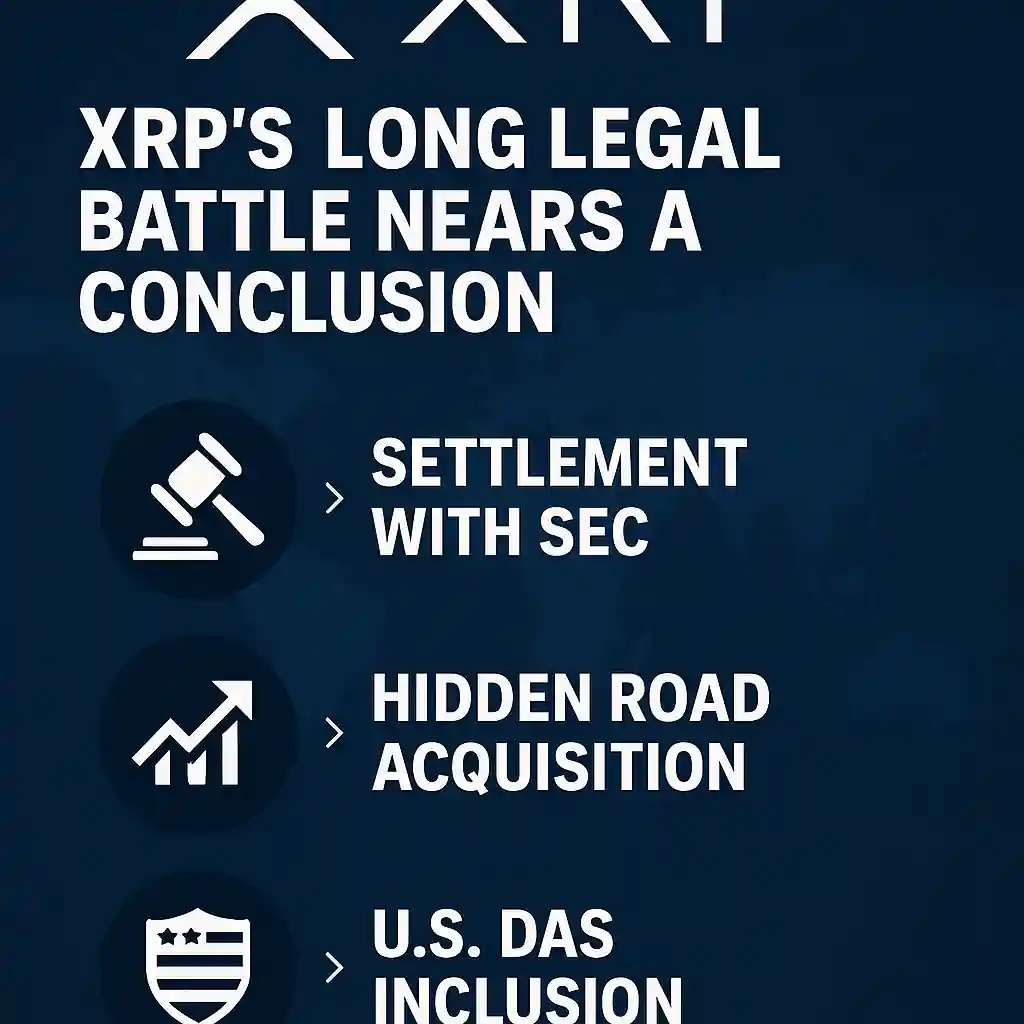

XRP’s Long Legal Battle Nears a Conclusion
XRP is gaining serious traction, and much of its newfound momentum comes from the resolution of its legal uncertainty. Since 2020, Ripple—the company behind XRP—has been locked in a legal battle with the Securities and Exchange Commission (SEC) over whether it unlawfully issued XRP as a security.
But this chapter is nearly closed. On May 8, Ripple and the SEC jointly proposed settling the lawsuit for $50 million, a reduction from the initially discussed $125 million. If approved, Ripple will regain $75 million and more importantly, clear the path to operate XRP without fear of regulatory shutdown.
This settlement would eliminate the single biggest risk hanging over XRP, giving investors renewed confidence in the token’s long-term value proposition.
Ripple’s Hidden Road Deal Bridges Crypto and Finance
In April, Ripple made a bold $1.2 billion acquisition of Hidden Road, a prime brokerage firm serving institutional clients. This move positions XRP right at the center of institutional finance.
By owning Hidden Road, Ripple now enables XRP-based stablecoins to be used as collateral for institutional borrowing. These can now function across both traditional financial platforms and the cryptocurrency ecosystem.
Moreover, post-trade services provided by Hidden Road will now operate on the XRP ledger, increasing transaction volume and boosting the token’s use in real financial workflows. This integration marks a key step toward mainstream XRP adoption by hedge funds and financial institutions.
XRP Likely to Be Held by U.S. Government Under New Policy
In another potential milestone, XRP may soon be part of a U.S. government-backed Digital Asset Stockpile (DAS). This executive-order-based initiative would require the government to hold seized crypto assets—including XRP—instead of liquidating them.
While not a direct market purchase, this policy would reduce XRP’s circulating supply. With fewer tokens available on the open market, demand-side pressure could push prices higher over time. Fewer sellers and increased credibility often mean greater long-term valuation support.
Inclusion in the DAS would also signal to the market that XRP is a legitimate, government-recognized asset. That kind of institutional validation adds yet another layer of trust for conservative investors.
A Convergence of Catalysts Supports XRP’s Growth
When you put these three catalysts together—the near-resolution of the SEC lawsuit, the Hidden Road acquisition, and likely inclusion in the U.S. DAS—they paint a bullish long-term picture for XRP.
These aren’t just short-term price drivers. They reshape XRP’s role in the financial system and reinforce its utility as more than just a speculative asset. The coin is gaining credibility and usage in both traditional and decentralized finance.
XRP May Outperform in a Post-Regulatory Clarity Landscape
As XRP enters a post-litigation era, its upside potential increases significantly. With legal clarity, institutional tools, and potential government backing, the coin is better positioned than most to thrive in the next phase of crypto market maturity.
Long-term holders may find the next few years rewarding—especially if the DAS, institutional usage, and reduced supply dynamics take effect as expected.